

Against the backdrop of green chemistry, bio-based materials, and the growing demand for renewable resource utilization, the high-value use of by-products from cashew processing is attracting increasing attention. As an important liquid resource extracted from cashew nut shells, cashew nut shell liquid is being transformed from an agricultural by-product into a valuable natural phenolic raw material for coatings, resins, adhesives, and composite materials.
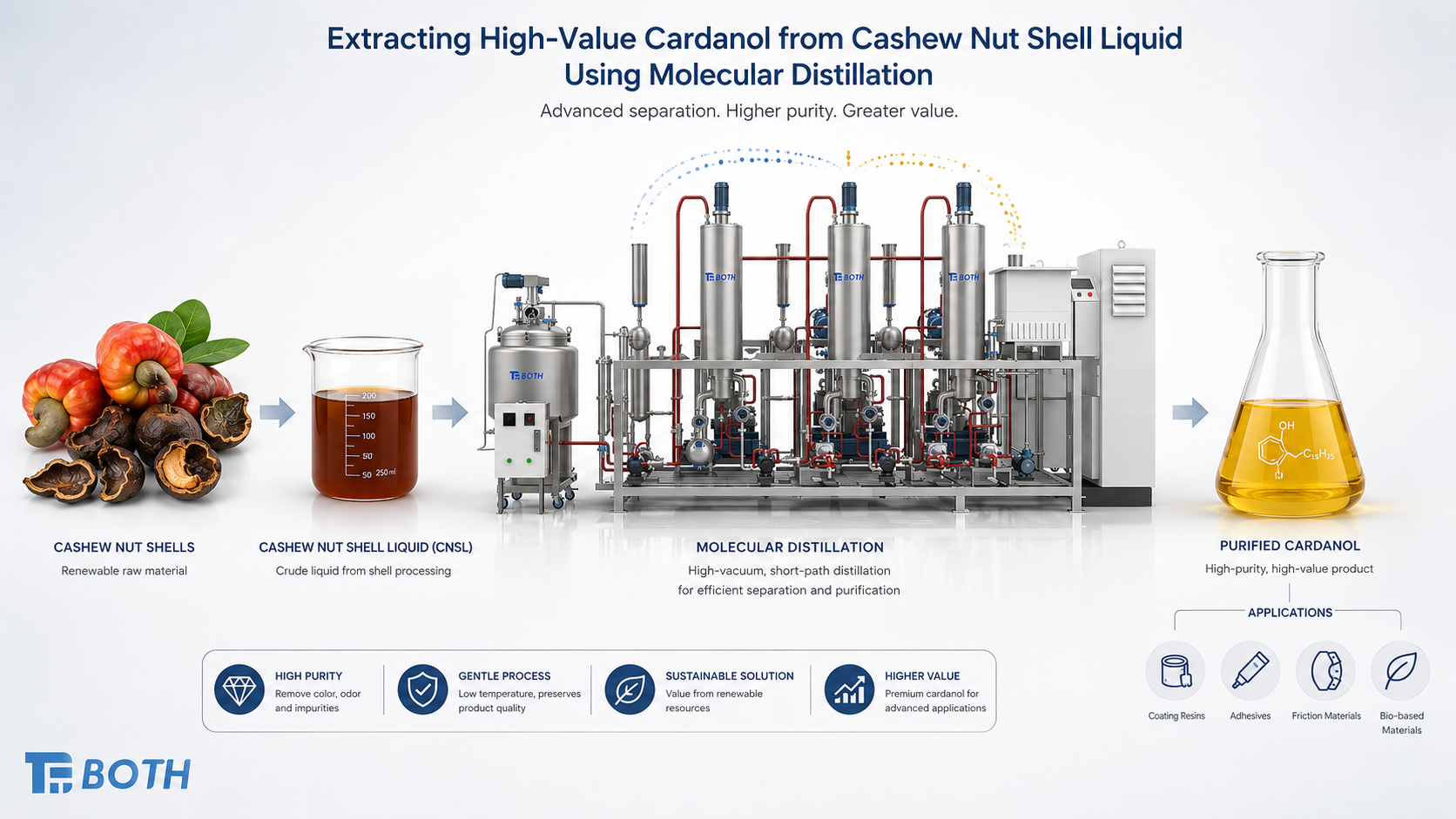
Cashew nut shell liquid, also known as CNSL, is a natural phenolic mixture obtained by pressing or extracting cashew nut shells. Its composition varies depending on the extraction method and thermal treatment process. Natural CNSL usually contains anacardic acid, cardanol, cardol, and a small amount of methyl cardol. After specialized heat treatment, anacardic acid can undergo decarboxylation and be converted into cardanol, significantly increasing the cardanol content in technical CNSL.
Cardanol is an important product obtained through extraction, separation, and purification of cashew nut shell liquid. It is a natural phenolic compound with a unique chemical structure. Its molecule contains a benzene ring, a polar hydroxyl group, and a C15 unsaturated long carbon chain attached at the meta-position. This structure gives cardanol a wide range of performance advantages: the benzene ring helps improve heat resistance; the hydroxyl group provides better wetting ability and reactivity with contact surfaces; and the C15 unsaturated long chain contributes to good flexibility, excellent hydrophobicity, low permeability, and self-drying properties.
Because of these characteristics, cardanol can be used as a substitute or partial substitute for phenol in the production of epoxy curing agents, phenolic resins, phenolic laminates, copper-clad laminates, HB boards, surfactants, coating-grade phenolic resins, adhesives, friction materials, and other bio-based chemical products. Compared with traditional petrochemical phenolic raw materials, cardanol is derived from renewable plant resources and combines performance benefits with green material value, giving it strong potential in low-carbon chemical production and sustainable materials development.
However, obtaining high-quality cardanol from cashew nut shell liquid in a stable and efficient way is not simple. CNSL is a high-boiling, heat-sensitive, and relatively high-viscosity natural oily material. In traditional distillation processes, it may face challenges such as long heating time, color darkening, coking, and unstable fraction separation. In industrial production, improper control of vacuum degree, heating method, residence time, and condensation efficiency can directly affect the purity, color, and downstream application performance of cardanol.
Wiped film short path molecular distillation provides a more suitable purification solution for this type of natural phenolic material. After the material enters the molecular distillation system, the wiper forms a uniform thin film on the evaporation wall. Under high vacuum conditions, light components and heavy components can be effectively separated. Compared with traditional distillation, molecular distillation offers short material residence time, relatively gentle operating temperature, lower risk of thermal decomposition, and better continuous processing capability. It is especially suitable for the separation and purification of high-boiling, high-viscosity, and heat-sensitive materials. BOTH molecular distillation systems can be configured as glass type, stainless steel type, single-stage, two-stage, multi-stage, and fully jacketed automatic feeding and discharging systems according to different material characteristics, meeting different requirements from laboratory research to pilot scale-up and industrial continuous production.
At the laboratory R&D stage, companies can first use a glass wiped film short path molecular distillation system to conduct small-scale testing on CNSL samples. This helps observe material fluidity, color changes, fraction separation performance, and vacuum stability, while quickly optimizing parameters such as temperature, vacuum degree, feeding rate, and condensation conditions.
At the pilot scale-up stage, stainless steel molecular distillation equipment can be selected to improve heat transfer efficiency and processing capacity. This stage is suitable for further verifying continuous feeding, continuous discharging, and long-term operation stability.
For industrial production projects, the system can be equipped with full jacketed heating, automatic feeding and discharging, gear pump discharge, high-vacuum units, cold trap protection, and automatic control modules. These configurations help reduce the risks of blockage, coking, and vacuum fluctuation, while improving the stability and economic efficiency of cardanol production.
From the application side, cardanol can serve not only the coatings, epoxy curing agent, phenolic resin, and copper-clad laminate industries, but also further expand into surfactants, oilfield chemicals, rubber additives, friction materials, adhesives, and bio-based polymer materials. As market demand increases for low-VOC, renewable, corrosion-resistant, and high-performance materials, the industrial value of cardanol is expected to continue growing.
In addition to the purification of cardanol from CNSL, similar natural oils, plant extracts, herbal active ingredients, Omega-3 fish oil, vitamin E, MCT oil, biodiesel, and other projects can also form complete production lines through extraction, evaporation, molecular distillation, and purification processes. For some food, herbal, nutraceutical, and biological product projects, freeze-drying technology can also be combined for raw material stabilization, low-temperature drying, and active ingredient protection, further expanding the high-value application scenarios of natural resources. BOTH freeze drying equipment is widely used in food production, biopharmaceuticals, nutrition and health product production, and biological research, and can be combined with molecular distillation systems to build a more complete process solution.
For CNSL-to-cardanol purification projects, BOTH can provide customized molecular distillation solutions based on the customer’s raw material properties, target purity, final application, and required capacity. From laboratory validation and pilot scale-up to industrial production lines, BOTH helps customers shorten process development time, improve separation efficiency, and build a stable foundation for future large-scale production.
If you are planning a cashew nut shell liquid purification project for cardanol production, it is recommended to confirm the following key parameters in advance:
What is your current production scale?
Are you planning to expand production in the future?
What processing capacity do you need, such as kg/h, kg/day, or ton/day?
Contact BOTH engineers to get a customized equipment selection and complete process solution for cardanol purification from cashew nut shell liquid.
Post time: Jul-16-2026