

What Is a Freeze Dryer?
A freeze dryer is a machine that removes water from food, pharmaceuticals, and biological materials through vacuum freeze drying. Instead of evaporating water with heat, it freezes the product first and then converts the ice directly into vapor under vacuum. This process, known as sublimation, preserves the product’s structure, flavor, nutrients, and appearance far better than conventional drying methods.
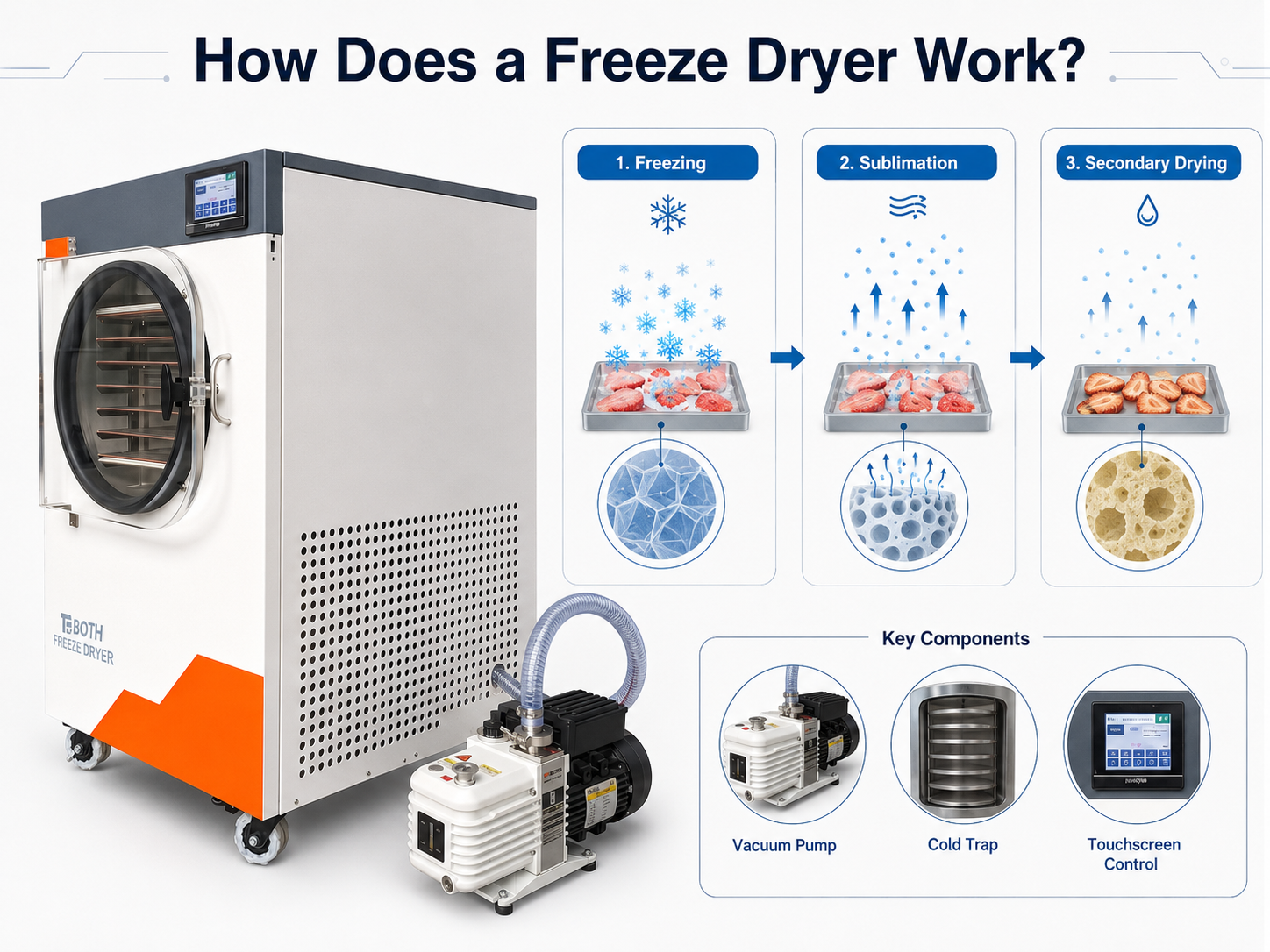
How Does a Freeze Dryer Work?
A freeze drying machine operates through three precisely controlled stages that remove moisture while minimizing heat damage.
1. Freezing
The product is rapidly frozen below its eutectic or critical temperature, typically below -20°C. Water inside the material forms solid ice crystals, stabilizing the product structure before drying begins.
2. Primary Drying (Sublimation)
Once the chamber reaches a high vacuum, the shelf temperature gradually increases. Instead of melting, the ice sublimates directly into water vapor, which is captured by the cold trap (condenser). This stage removes approximately 90–95% of the moisture while preserving the product’s original shape.
3. Secondary Drying (Desorption)
After visible ice is removed, a controlled heating process eliminates the remaining bound moisture. This stage reduces the final moisture content to improve product stability and extend shelf life.
Why Vacuum Is Essential
The vacuum system lowers atmospheric pressure so ice can sublimate without passing through the liquid phase. Maintaining a stable vacuum is critical for efficient freeze drying, consistent product quality, and reduced drying time. Modern vacuum freeze dryers continuously monitor pressure and temperature to optimize the entire process.
Main Components of a Freeze Dryer
A modern freeze drying equipment system typically includes:
- Freeze-drying chamber
- Refrigeration system
- Heated shelves
- Vacuum pump
- Cold trap (ice condenser)
- PLC or touchscreen control system
- Temperature and vacuum sensors
These components work together to ensure accurate temperature control, efficient moisture removal, and repeatable drying performance.
Why Freeze Drying Is Better Than Conventional Drying
Compared with hot-air drying or dehydration, a vacuum freeze dryer offers significant quality advantages.
|
Freeze Drying |
Traditional Drying |
| Low-temperature process | High-temperature drying |
| Retains nutrients | Nutrient loss |
| Preserves natural color | Color degradation |
| Maintains original shape | Shrinkage and deformation |
| Long shelf life | Shorter storage time |
| Excellent rehydration | Limited rehydration |
Because no liquid water is present during drying, freeze-dried products experience minimal shrinkage and maintain their original texture.
What Can Be Freeze Dried?
Modern freeze dryers are widely used across multiple industries, including:
- Fruits and vegetables
- Coffee and instant beverages
- Meat and seafood
- Ready-to-eat meals
- Dairy products
- Pet food
- Pharmaceutical products
- Vaccines and biologics
- Herbal extracts
- Laboratory samples
The versatility of freeze drying technology makes it one of the most valuable preservation methods for high-value materials.
How Long Does Freeze Drying Take?
The drying cycle depends on product thickness, moisture content, batch size, and equipment configuration. Typical processing times include:
- Fruits and vegetables: 12–24 hours
- Meat and seafood: 18–30 hours
- Pharmaceuticals and biological products: 24–48 hours
Optimized freeze-drying recipes can improve drying efficiency while maintaining product quality.
Home Freeze Dryer vs. Commercial Freeze Dryer
A home freeze dryer is ideal for household food preservation and small-batch production. A commercial freeze dryer provides larger chamber capacity, automated recipe management, precise temperature control, and higher production efficiency.
For food manufacturers, investing in an industrial freeze dryer improves batch consistency, production capacity, and long-term operating efficiency.
Frequently Asked Questions
What is the principle of a freeze dryer?
A freeze dryer removes moisture by freezing the product and allowing ice to sublimate directly into vapor under vacuum, avoiding the liquid phase and protecting product quality.
Does freeze drying destroy nutrients?
No. Because freeze drying uses low temperatures, most vitamins, antioxidants, flavors, and natural colors are retained much better than with conventional drying.
Why is a vacuum pump required?
The vacuum pump creates the low-pressure environment necessary for sublimation and allows moisture to be efficiently removed from the product.
What products are best suited for freeze drying?
Foods with high nutritional value, pharmaceuticals, biological materials, coffee, herbs, pet food, and premium ingredients are excellent candidates for vacuum freeze drying.
Choosing the Right Freeze Dryer
Whether you need a home freeze dryer, commercial freeze dryer, or industrial freeze drying equipment, selecting the correct chamber size, cold trap temperature, vacuum capacity, and shelf control system is essential for maximizing product quality and production efficiency.
Modern freeze drying machines provide automated process control, stable vacuum performance, and precise temperature management, helping manufacturers consistently produce premium freeze-dried products with extended shelf life.
Post time: Sep-08-2026