

Why Freeze Dry Fruit?
Freeze drying is one of the most effective food preservation methods for maintaining the natural color, flavor, texture, and nutritional value of fresh fruit. Unlike conventional hot-air drying, a freeze dryer removes moisture through vacuum freeze drying, where frozen water sublimates directly into vapor under low pressure. This low-temperature process minimizes heat damage and significantly extends product shelf life.
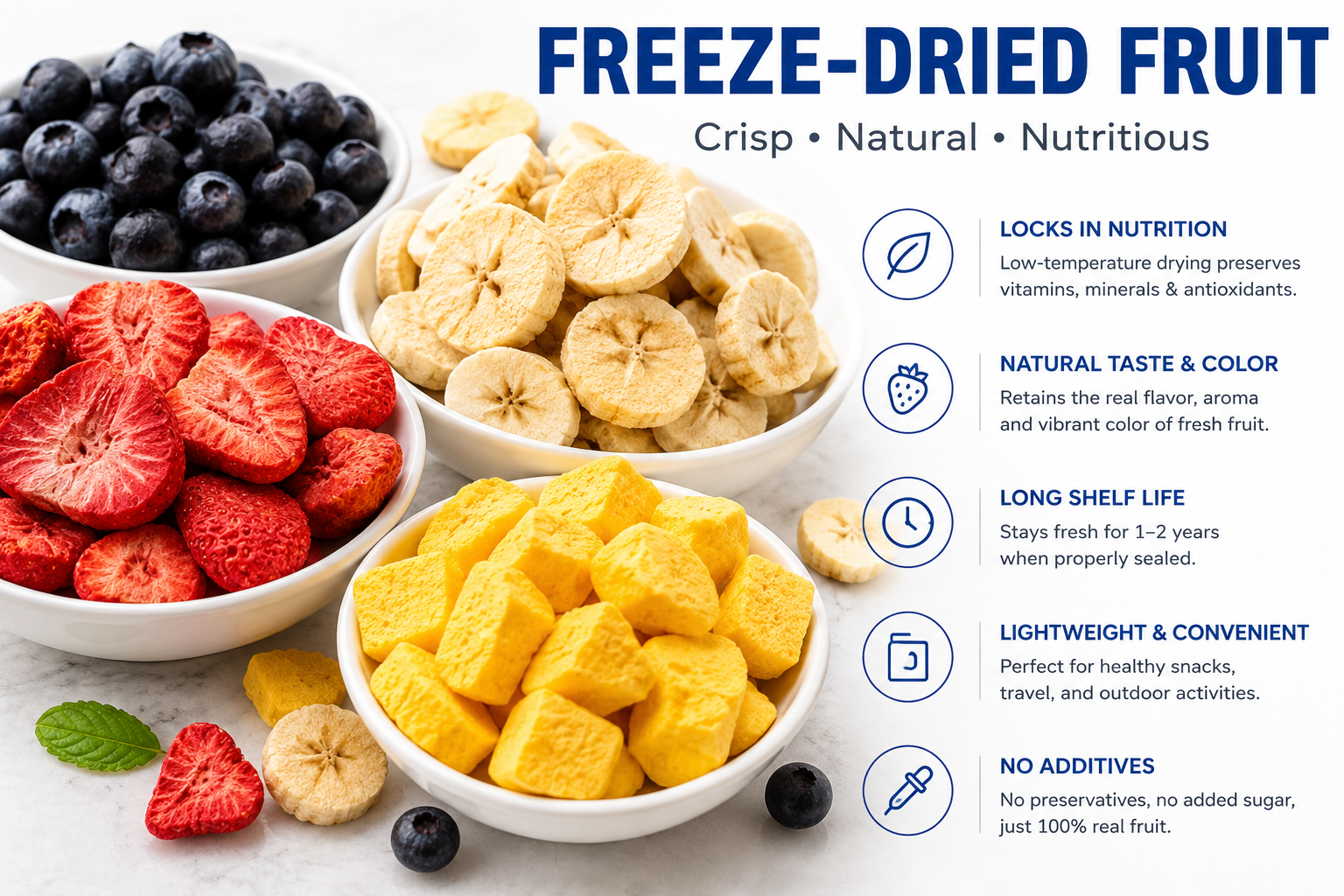
What Fruit Can Be Freeze Dried?
Most fruits can be processed in a freeze drying machine, including strawberries, blueberries, apples, bananas, mangoes, pineapples, peaches, grapes, raspberries, and dragon fruit. Fruits with high moisture content generally require longer drying cycles, while high-sugar fruits may need optimized drying recipes to achieve a crisp texture.
Step 1: Select Fresh, High-Quality Fruit
Choose ripe, undamaged fruit with uniform maturity. Wash thoroughly, remove stems, seeds, or pits, and slice into even pieces approximately 5–10 mm thick. Uniform thickness improves heat transfer and ensures consistent drying throughout the batch.
Step 2: Pre-Freeze the Fruit
Proper pre-freezing is essential for successful freeze drying. Freeze the fruit completely before applying vacuum. The product core temperature should typically reach below -20°C, allowing all free water to crystallize. Insufficient freezing may cause structural collapse, bubbling, or incomplete drying.
Step 3: Load the Freeze Dryer
Arrange the fruit in a single layer on stainless steel trays without overlapping. Adequate spacing allows uniform heat distribution and efficient water vapor removal during the sublimation process, improving drying efficiency and final product quality.
Step 4: Start the Vacuum Freeze Drying Process
A vacuum freeze dryer performs three controlled stages:
- · Freezing – Solidifies all moisture inside the fruit.
- · Primary Drying (Sublimation) – Ice converts directly into vapor under high vacuum.
- · Secondary Drying (Desorption) – Removes residual bound moisture to achieve long-term stability.
Depending on fruit type, moisture content, slice thickness, and equipment capacity, a complete freeze drying process typically requires 12–24 hours.
Step 5: Verify Complete Dryness
Properly freeze-dried fruit should feel light, dry, and crispy throughout. Break larger pieces to confirm there are no cold, soft, or icy centers. If residual moisture remains, extend the secondary drying cycle until the product reaches the target moisture content.
Step 6: Package Immediately
Freeze-dried fruit rapidly absorbs moisture from the surrounding air. Package products immediately using vacuum-sealed bags or moisture-barrier pouches with oxygen absorbers. Proper packaging allows freeze-dried fruit to remain shelf-stable for months or even years under normal storage conditions.
Home Freeze Dryer vs. Commercial Freeze Dryer
A home freeze dryer is suitable for small household batches, recipe development, and hobby food preservation. A commercial freeze dryer or industrial freeze dryer provides significantly higher throughput, programmable process control, larger drying area, automated recipe management, and production consistency required for food manufacturing businesses.
As production demand increases, commercial freeze drying equipment also improves energy efficiency, batch uniformity, and overall operating productivity.
Applications of Freeze-Dried Fruit
Freeze-dried fruit has become increasingly popular across multiple industries due to its long shelf life and premium quality. Common applications include:
- · Healthy snack manufacturing
- · Breakfast cereals and granola
- · Smoothies and beverage ingredients
- · Bakery decorations
- · Dairy and yogurt toppings
- · Outdoor and emergency foods
- · Pet food ingredients
- · Nutraceutical products
The growing demand for healthy, convenient foods continues to drive investment in commercial freeze drying machines worldwide.
Choosing the Right Freeze Dryer
Selecting the appropriate freeze drying machine depends on several factors:
- Product type and moisture content
- Batch capacity
- Daily production volume
- Cold trap temperature
- Vacuum performance
- Shelf temperature control
- Automation requirements
Industrial manufacturers often begin with pilot-scale testing before upgrading to a full industrial freeze dryer for commercial production.
Frequently Asked Questions
How long does it take to freeze dry fruit?
Most fruits require 12–24 hours, depending on moisture content, slice thickness, loading quantity, and freeze dryer performance.
Is freeze drying better than dehydrating?
Yes. Freeze drying better preserves nutrients, natural color, flavor, texture, and product shape because the drying process occurs at low temperatures under vacuum.
Can all fruits be freeze dried?
Nearly all fruits can be processed successfully, although high-sugar fruits may require optimized drying parameters to achieve the desired texture.
What is the best machine for freeze drying fruit?
For home users, a compact home freeze dryer is sufficient. For food factories and commercial production, a commercial freeze dryer or industrial freeze dryer offers higher productivity, better process control, and consistent product quality.
Optimize Your Fruit Freeze Drying Process
Whether you are preserving seasonal fruit at home or building a commercial freeze-dried food business, selecting the right freeze dryer is critical to product quality and production efficiency. Modern vacuum freeze drying equipment provides reliable temperature control, deep vacuum performance, and programmable drying cycles, helping manufacturers produce premium freeze-dried fruit with maximum nutritional retention and extended shelf life.
Post time: Sep-06-2026